Europe's Military Awakening: The Reckoning Has Arrived
From decades of underfunding to a continental arms surge, Europe's defence sector is being rebuilt in real time — and the stakes could not be higher.
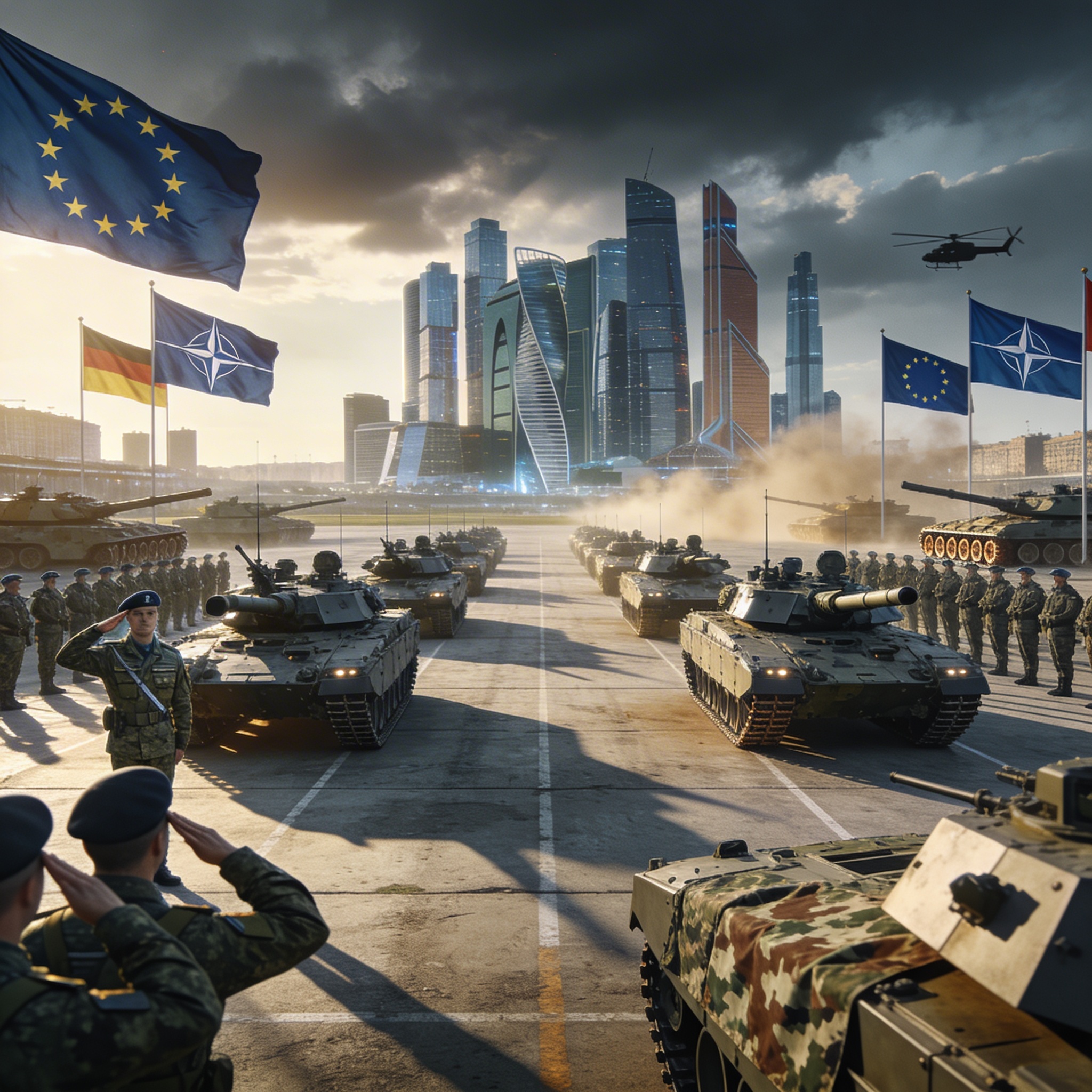
Something fundamental has shifted in Europe. The continent that spent three decades drawing down its armed forces, cashing in the so-called "peace dividend" with something close to institutional relief, now finds itself in a full-throated sprint toward rearmament. The numbers are staggering, the urgency is palpable, and the structural challenges are formidable. In 2026, Europe's military sector is not merely growing — it is being reconceived from the ground up, driven by geopolitical shocks, resurgent nationalism, and a belated recognition that hard power, once surrendered, is brutally difficult to rebuild.
Something fundamental has shifted in Europe. The continent that spent three decades drawing down its armed forces, cashing in the so-called "peace dividend" with something close to institutional relief, now finds itself in a full-throated sprint toward rearmament. The numbers are staggering, the urgency is palpable, and the structural challenges are formidable. In 2026, Europe's military sector is not merely growing — it is being reconceived from the ground up, driven by geopolitical shocks, resurgent nationalism, and a belated recognition that hard power, once surrendered, is brutally difficult to rebuild.
The Spending Surge — Record Budgets and What They Really Mean
The headline figures are, by any historical standard, extraordinary. Global defence spending reached USD 2.63 trillion in 2025, up from USD 2.48 trillion the year before — a real-terms increase of 2.5 percent, according to the International Institute for Strategic Studies in its flagship Military Balance 2026 report [1]. Europe's contribution to that number has grown dramatically. EU member states' defence spending climbed to approximately 343 billion euros in 2024, representing roughly 1.9 percent of GDP, and is estimated to have hit 381 billion euros in 2025 — around 2.1 percent of GDP — according to Reuters [5]. The region now accounts for more than 21 percent of total global defence expenditure [7]. That is a seismic shift for a continent long accused of free-riding on American security guarantees.
No country has moved more aggressively than Germany. In March, Berlin sent the Bundestag an €82.7 billion core defence budget for 2026, up sharply from €62.4 billion the previous year, and pledged a trajectory toward 3.5 percent of GDP [27]. The scale of this commitment represents a genuine rupture with Germany's post-war strategic culture — a country that once treated its own military with something approaching institutional embarrassment is now bankrolling Europe's hard power ambitions with remarkable determination.
Yet the numbers, impressive as they are, tell only part of the story. Analysts and policymakers have been quick to note that spending announcements and actual capability generation are very different things. The Milken Institute and Oliver Wyman published a joint report in February 2026 warning of a persistent "defence readiness gap" across the UK and Europe, identifying the structural reforms still needed to translate budget commitments into battlefield-ready forces. Writing cheques is the easy part. Rebuilding atrophied supply chains, training qualified personnel, and expanding industrial capacity at speed — that is where the real work begins, and where the real risks accumulate.
---

""Orders are soaring. Deliveries are not keeping pace. The result is a growing backlog that defence manufacturers are struggling to absorb — and that gap is a strategic vulnerability, not an administrative inconvenience.""
Production Lags — The Industrial Bottleneck Nobody Wants to Advertise
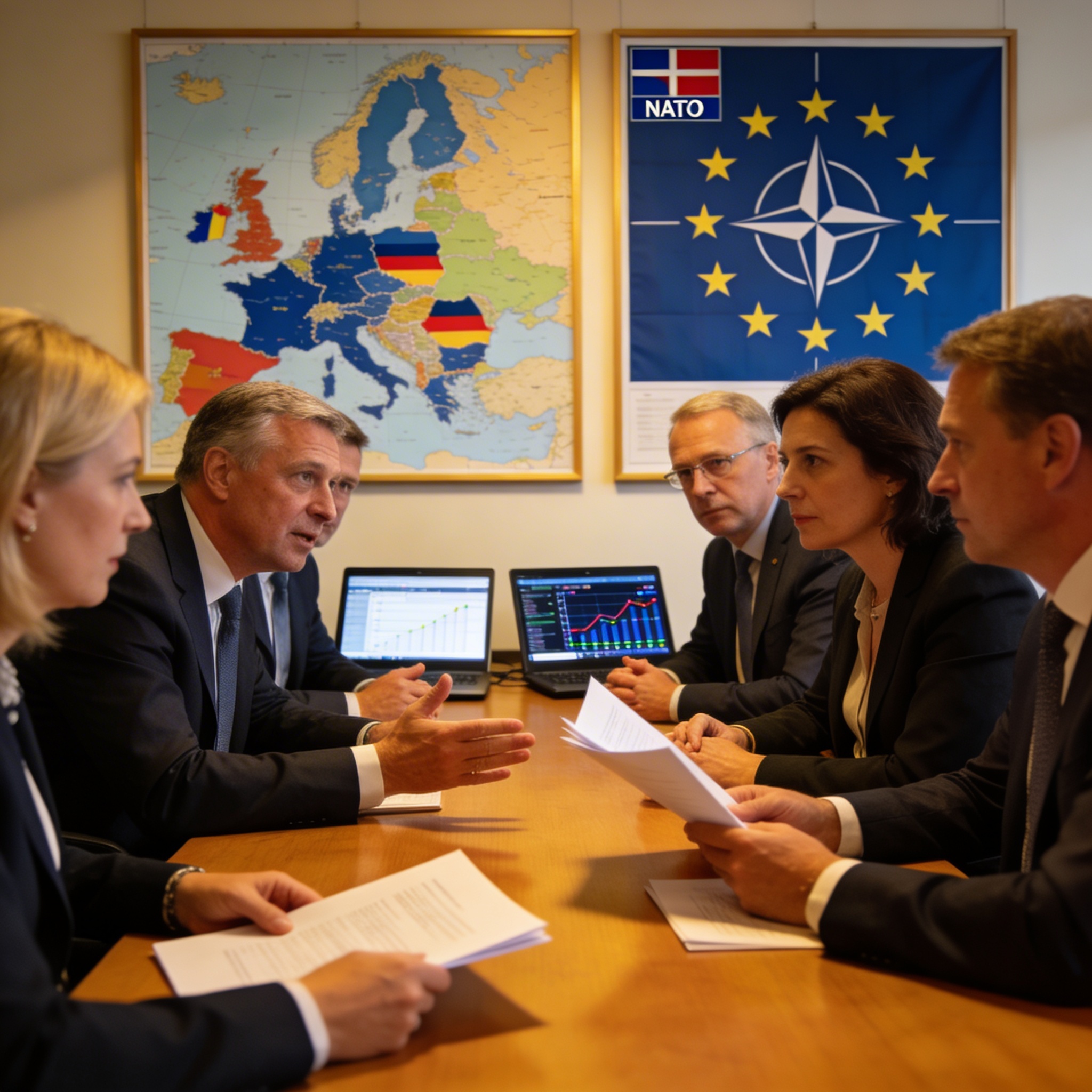
If the spending surge represents Europe's political will, the production lag represents its industrial reality — and the gap between the two is uncomfortable. Between 2025 and early 2026, the six-month moving average of domestic defence orders across Europe rose by roughly two times, while domestic sales increased by a far more modest margin, according to analysis published by Air Street Press [2]. Orders are soaring. Deliveries are not keeping pace. The result is a growing backlog that defence manufacturers are struggling to absorb, constrained by workforce shortages, raw material bottlenecks, and production facilities that were never designed to operate at wartime tempo.
This is not a minor administrative inconvenience. It is a strategic vulnerability. Ammunition stockpiles across multiple NATO member states remain critically low following sustained transfers to Ukraine. Artillery production, air defence munitions, and armoured vehicle components are all in high demand and short supply. The European Defence Fund's Indicative Multiannual Perspective for 2026–2027 outlines an ambitious agenda of collaborative research and development calls designed to accelerate industrial capacity [4], but the gap between policy ambition and factory-floor reality remains wide.
The structural causes are deeply embedded. For decades, European defence companies operated in a buyers' market shaped by governments that prioritised cost efficiency over surge capacity. Just-in-time supply chains, lean workforces, and consolidated supplier bases made commercial sense in peacetime. They make almost no sense when a continent needs to rapidly scale production. BBVA Research has noted that the effort to increase military and security capabilities will only be sustainable if it is structured to support broader economic growth [3] — a reminder that defence investment cannot be treated as a purely military exercise. It has macroeconomic consequences that ripple far beyond the factory gates.
VanEck's defence industry analysis is blunter still: 2026 looks set to continue the trend of increased military activity, higher defence budgets, and bigger order backlogs, with key risks centred on the ability of industry to execute [6]. The orders are real. The question is whether Europe's industrial base can rise to meet them before the strategic window closes.
---
""Writing cheques is the easy part. Rebuilding atrophied supply chains, training qualified personnel, and expanding industrial capacity at speed — that is where the real work begins, and where the real risks accumulate.""
Strategic Architecture — NATO, the EU, and the Question of Autonomy
Beneath the spending numbers lies a deeper, more contested question: what kind of military power does Europe actually want to become? The answer is far from settled, and the institutional architecture through which European defence is organised remains a source of genuine tension. NATO remains the foundational security guarantee for most European states, with its collective defence commitments enshrined in Article 5 and its funding frameworks setting baseline expectations for member contributions [25]. But the political tremors emanating from Washington in recent years have accelerated a parallel conversation about European strategic autonomy — the capacity to act independently when alliance cohesion falters.
The European Commission has positioned itself as a central actor in this transformation. Its Future of European Defence agenda [18] envisions deeper industrial integration, joint procurement, and a defence industrial base that is genuinely European rather than a patchwork of nationally siloed capabilities. The European Defence Fund is the financial instrument at the centre of this ambition, channelling collaborative investment into research and development across member states [4]. In theory, it represents a step change in how Europe thinks about collective security. In practice, it remains underfunded relative to the scale of the challenge.
Germany's rearmament is reshaping European power dynamics in ways that are only beginning to be fully appreciated. Politico's analysis of Berlin's military expansion describes it as an event that "upends Europe's power balance" [27] — a deliberate phrase that captures both the opportunity and the anxiety. France, long the EU's dominant military voice, is watching its relative position shift. Smaller states are recalibrating their relationships with Berlin. And the question of how a resurgent German military integrates with both NATO structures and EU ambitions is one that European diplomats are navigating with considerable delicacy.
The Munich Security Conference's 2026 Europe report [17] frames the strategic challenge with characteristic precision: Europe must simultaneously reassure its own populations, deter adversaries, and maintain alliance cohesion — three objectives that are complementary in theory but frequently in tension in practice.
---

""Europe is not yet the military power it needs to be. But for the first time in a generation, it is building with genuine urgency — and the world is watching to see whether intention becomes capability before the next crisis arrives.""
The Road to 2030 — Technology, Talent, and the Long Game
If 2026 is the year Europe confronts the scale of its defence challenge, the road to 2030 will determine whether that confrontation produces durable capability or merely expensive aspiration. Technology is at the heart of the transformation. Hybrid threats, drone warfare, and cyber operations are fundamentally changing the requirements for defence and the protection of critical infrastructure, as highlighted by the XPONENTIAL Europe 2026 conference on security and defence. Autonomous systems, artificial intelligence, and electronic warfare are not future considerations — they are current operational realities, and Europe's armed forces are racing to integrate them at scale.
The talent question is equally pressing. Defence industries across the continent face acute shortages of engineers, software developers, and technically qualified tradespeople. Decades of underinvestment in defence-related education and training pipelines have left a skills deficit that cannot be resolved quickly. The NATO Foundation has noted the gap between hard spending numbers and the "fuzzy perspectives" surrounding actual capability development [26] — a polite way of acknowledging that money alone cannot substitute for institutional knowledge and human expertise.
RAND Corporation analysis [12] and the EU's own Defence Readiness Roadmap [16] both emphasise that the path to 2030 requires not just more spending but smarter spending — coordinated procurement, reduced duplication, and investment in the kinds of enabling capabilities that multiply the effectiveness of everything else. Logistics, intelligence, communications, and cyber resilience are unglamorous but foundational. They are also areas where European cooperation has historically been weakest.
The World Economic Forum's Global Risks Report 2026 [20] situates European defence investment within a broader landscape of interconnected risks — geopolitical fragmentation, technological disruption, and economic instability — that make strategic patience a luxury few governments can afford. Public opinion is shifting, too. According to Eurobarometer data from July 2025, Europeans ranked defence investment as the seventh priority among ten options offered — a number that would have seemed implausibly high a decade ago [9].
Europe is not yet the military power it needs to be. But for the first time in a generation, it is building with genuine urgency — and the world is watching to see whether intention becomes capability before the next crisis arrives.
---