More Connected Than Ever, More Alone Than Before
As social media use surges globally, research reveals a troubling paradox: the platforms designed to bring us together may be driving us apart.
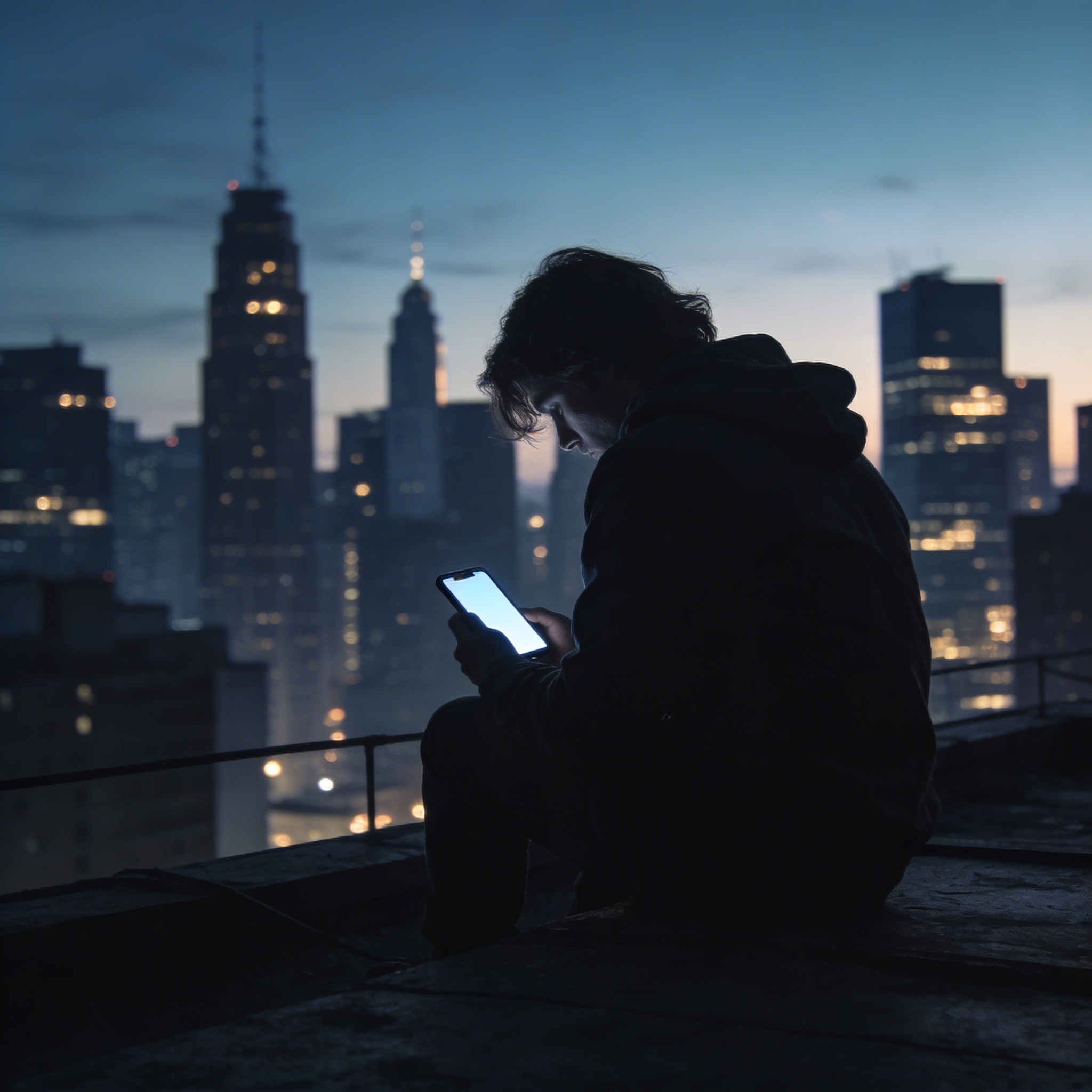
Scroll through your phone for ten minutes and you will encounter hundreds of smiling faces, vibrant gatherings, and carefully curated moments of human togetherness. Yet put the phone down, and an uncomfortable silence often rushes in. Across the world, millions of people are experiencing exactly that contradiction — a digital life overflowing with connection and a real life hollowed out by its absence. Loneliness, once considered a private affliction, has quietly become one of the defining public health crises of our time. And the very tools we built to cure it may be making it worse.
Scroll through your phone for ten minutes and you will encounter hundreds of smiling faces, vibrant gatherings, and carefully curated moments of human togetherness. Yet put the phone down, and an uncomfortable silence often rushes in. Across the world, millions of people are experiencing exactly that contradiction — a digital life overflowing with connection and a real life hollowed out by its absence. Loneliness, once considered a private affliction, has quietly become one of the defining public health crises of our time. And the very tools we built to cure it may be making it worse.
A Silent Epidemic With a Very Loud Footprint
It does not arrive with a fever or a cough. There is no visible wound, no blood test that confirms its presence. Yet loneliness is killing people — quietly, consistently, and at a scale that demands our attention. According to the World Health Organization, loneliness is linked to an estimated 100 deaths every hour, amounting to more than 871,000 deaths annually worldwide [4]. Let that number settle for a moment. That is not a metaphor for sadness. That is a measurable, preventable loss of human life.
The loneliness epidemic, as researchers and public health officials have come to call it, refers to the painful and widening gap between the social connections people desire and the ones they actually have [6]. It is not simply about being physically alone — a person can be surrounded by colleagues, family members, and acquaintances and still feel profoundly isolated. The distinction matters, because it tells us that loneliness is not a logistical problem. It is an emotional and relational one.
The numbers paint a stark portrait of a society coming apart at the seams. In the United States, surveys suggest that loneliness rates have been climbing steadily for decades, a trend accelerated sharply by the COVID-19 pandemic and its social disruptions [28]. Among young adults — the very demographic that grew up with smartphones in their hands — the situation is particularly alarming. A 2023 Surgeon General's Report cited multiple surveys finding that people between the ages of 15 and 24 now spend 70% less time with friends in person than their counterparts did two decades ago [5]. Seventy percent. An entire generation is growing up with fewer of the face-to-face interactions that researchers consistently identify as foundational to emotional well-being.
The World Health Organization's June 2025 report made it unambiguous: strong social connections are directly linked to better health outcomes and a meaningfully reduced risk of early death [4]. Loneliness, by extension, is not a soft, subjective complaint to be dismissed. It is a physiological threat, as dangerous in its chronic form as smoking fifteen cigarettes a day. We have built elaborate public health systems to combat cardiovascular disease, diabetes, and cancer. Loneliness, which quietly feeds all three, largely goes unaddressed.
---

""Loneliness is not a soft, subjective complaint to be dismissed — it is a physiological threat, as dangerous in its chronic form as smoking fifteen cigarettes a day.""
The Scroll That Never Satisfies

Here is the central irony of our digital age: the platforms engineered to connect us — Facebook, Instagram, TikTok, Snapchat — appear to be fueling the very disconnection they promised to solve. The evidence is accumulating, and it is difficult to ignore.
A landmark study of more than 1,500 American adults between the ages of 30 and 70, conducted by researchers at Oregon State University, found that those in the upper 25% of social media usage frequency were more than twice as likely to report feelings of loneliness compared to lighter users [1]. Not marginally more likely. Twice as likely. The relationship between screen time and emotional isolation held even after researchers controlled for other variables, suggesting that social media use itself — not merely the personality type drawn to it — plays a meaningful role.
A separate decade-long study published through PsyPost found that social media use, whether active or passive, predicted a steady and consistent rise in loneliness over time [9]. Passive scrolling — the kind where you consume content without posting or engaging — was particularly associated with negative outcomes. Watching other people's highlight reels, it turns out, is a profoundly alienating experience. You are present at a party to which you were never actually invited.
For college students, the threshold for harm appears to be surprisingly low. Research published in early 2026 found that just 16 hours per week on social media — roughly two hours per day — was linked with higher odds of loneliness among U.S. college students [8]. Two hours. Many users spend that before noon.
A 2026 report further linked heavy social media use to declining well-being among young people, with teenage girls in Western countries showing some of the most acute effects [2]. The findings align with years of prior research suggesting that social comparison — measuring your own life against the polished presentations of others — corrodes self-esteem and deepens feelings of social exclusion. The heaviest social media users, defined as those spending at least 30 hours per week on platforms, were found to be 38% more likely to report being lonely than their less-connected peers [11]. The data is consistent, cross-demographic, and deeply concerning.
---
""Watching other people's highlight reels is a profoundly alienating experience. You are present at a party to which you were never actually invited.""
Cause, Symptom, or Both?
The relationship between social media and loneliness is not as simple as a straight line from one to the other. Researchers caution against an overly reductive reading of the evidence. Some studies suggest that lonely people are more likely to turn to social media in the first place — seeking online what they cannot find offline — which complicates the question of causation [7]. Does social media make us lonely, or does loneliness drive us to social media? The honest answer, increasingly, appears to be: both.
A peer-reviewed analysis published in the Annals of the New York Academy of Sciences concluded that social media use is weakly but consistently related to trait loneliness, and that it explains relatively little variance in loneliness compared to other predictors such as the quality of in-person relationships and life circumstances [7]. In other words, social media is not the sole villain in this story. It is one thread in a far more tangled web.
Research published in peer-reviewed journals found that using social media almost daily was associated with a meaningfully higher loneliness score compared to never using it, though the effect size varied across different demographic groups and platforms [3]. Interestingly, a press release from the New York Academy of Sciences highlighted that loneliness is more likely to be associated with the use of specific platforms rather than social media as a whole [18]. The app matters. The context matters. The way you use it matters.
What is becoming clearer is the concept of displacement. When time spent scrolling replaces time that might otherwise be spent in person with friends, family, or community, the net effect on social health is negative [5]. A Baylor University study linked both active and passive social media use to rising loneliness, reinforcing the idea that the platform itself — regardless of how you engage with it — has a measurable cost when it crowds out real-world interaction [23]. Technology does not have to be inherently toxic to cause harm. It simply has to be all-consuming enough to leave no room for anything else.
---

""We built social media to bring the world closer. The world has never been more accessible, and we have never felt further apart. That is not a technological failure. It is a human one.""
Finding Our Way Back to Each Other
The diagnosis is grim, but it is not a death sentence for human connection. Across disciplines — psychology, public health, urban planning, and technology ethics — voices are growing louder in calling for a rethinking of how we relate to our devices and to each other. The question is no longer simply whether social media is bad for us. It is what, concretely, we are willing to do about it.
Some researchers argue that technology itself could be part of the solution, provided it is designed with human well-being in mind rather than engagement metrics [15]. The current architecture of most social media platforms is built to maximize time on site — to keep you scrolling, reacting, comparing. Reforming that architecture, through regulation, transparency requirements, or user-controlled design features, is increasingly being discussed in legislative chambers across the United States and Europe. The WHO's June 2025 report called explicitly for greater investment in social connection as a public health priority, framing it alongside diet and exercise as a fundamental determinant of health [4].
At the individual level, the evidence points toward a straightforward, if difficult, prescription: less time on screens and more time in the physical presence of others. Research consistently shows that the quality of in-person relationships remains the single strongest predictor of whether someone feels lonely or connected [10]. Coffee with a friend. A walk with a neighbor. A phone call — an actual phone call — with someone you have been meaning to reach. These are not nostalgic luxuries. They are biological necessities.
For young people especially, the path forward requires intentional effort against powerful currents. The same 2023 Surgeon General's data showing a 70% decline in in-person time among teens and young adults also implies a generation that has largely forgotten what unmediated human connection feels like [5]. Rebuilding that muscle — and it is a muscle — takes practice, discomfort, and the willingness to put down the phone long enough to remember why we picked it up in the first place.
We built social media to bring the world closer. The world has never been more accessible, and we have never felt further apart. That is not a technological failure. It is a human one. And only humans can fix it.
---