Minds in Crisis: Can an App Save You?
As mental health reaches a global breaking point, a booming app industry promises relief — but can silicon truly substitute for soul?

Picture this: it's 2 a.m., your anxiety is a live wire, and your next therapy appointment is three weeks away. You reach for your phone — not to call anyone, but to open an app. This scenario is no longer a fringe experience. It is the daily reality for millions of people worldwide who cannot access traditional mental health care, cannot afford it, or simply cannot wait for it. The mental health crisis has become one of the defining emergencies of our era, and an entire industry has risen, rapidly and ambitiously, to meet it with code.
Picture this: it's 2 a.m., your anxiety is a live wire, and your next therapy appointment is three weeks away. You reach for your phone — not to call anyone, but to open an app. This scenario is no longer a fringe experience. It is the daily reality for millions of people worldwide who cannot access traditional mental health care, cannot afford it, or simply cannot wait for it. The mental health crisis has become one of the defining emergencies of our era, and an entire industry has risen, rapidly and ambitiously, to meet it with code.
A Crisis Without a Ceiling
The numbers are staggering, and they are getting worse. According to the World Health Organization, more than one billion people are currently living with mental health conditions, with services requiring what the organization has called an "urgent scale-up" [7]. In the United States alone, the picture is equally grim. A 2025 study conducted by Johns Hopkins Bloomberg School of Public Health found that nearly one in ten U.S. adults had experienced a mental health crisis in the previous year — a figure that underscores just how widespread and acute the problem has become [9]. Mental Health America's 2025 State of Mental Health report adds further texture to the emergency: 9.2% of adults with any mental illness were uninsured in 2022 and 2023, totaling more than five million people, while one in four adults with a mental illness reported an unmet need for treatment [6].
These are not abstract percentages. They represent parents who cannot get out of bed, teenagers spiraling in silence, veterans reliving trauma without support. The structural causes are well-documented: a shortage of licensed therapists, punishing insurance barriers, geographic deserts where mental health professionals simply do not exist, and a stigma that, despite years of public conversation, still keeps millions from seeking help at all [23].
Generation Z is bearing a disproportionate share of this burden. Research consistently shows elevated rates of anxiety, depression, and psychological distress among young people, a trend that researchers and clinicians have linked — with increasing certainty — to social isolation, economic precarity, and the corrosive dynamics of social media platforms [15]. The Jed Foundation, a nonprofit focused on youth mental health, warned in early 2026 that shrinking support systems and growing isolation were compounding the crisis for young people at an alarming rate [recent news]. Meanwhile, a Johns Hopkins media briefing in February 2026 examined the evolving and often damaging role of social media in worsening mental health outcomes across age groups [recent news].
The crisis, in short, has no ceiling in sight. And into that vacuum, technology has rushed with considerable force.
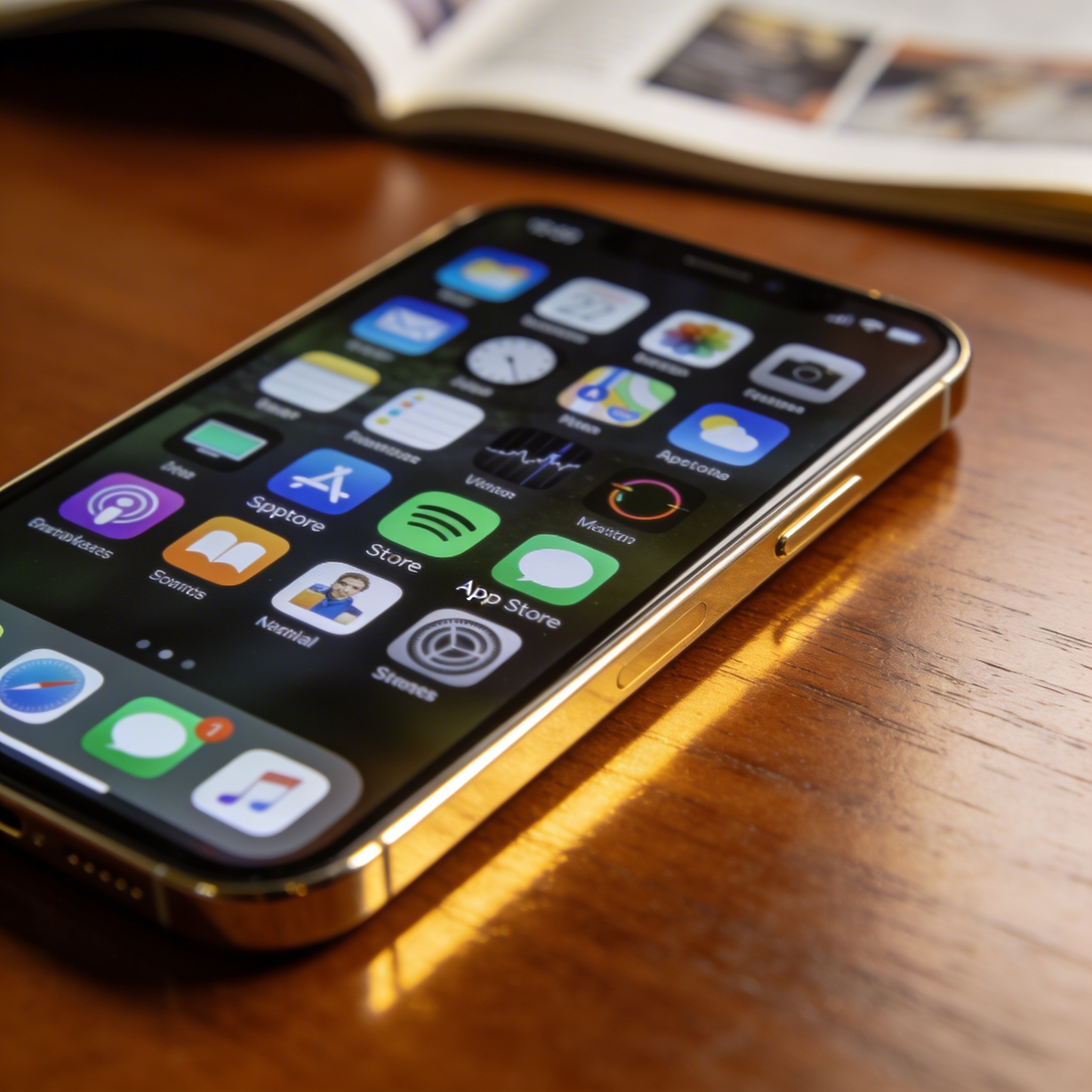
""The mental health crisis has no ceiling in sight — and into that vacuum, technology has rushed with considerable force.""
The App Gold Rush

There are now more than 10,000 mental health apps available in major app stores [4]. Read that number again. Ten thousand. The sheer volume signals both the scale of unmet demand and the commercial opportunity that demand represents. The global mental health apps market is on a steep upward trajectory, with projections placing its value in the billions of dollars by 2030, driven by increasing smartphone penetration, heightened awareness of mental health issues, and the residual behavioral shifts from the COVID-19 pandemic [10].
The apps themselves span an enormous range of approaches and ambitions. At one end of the spectrum sit mood-tracking tools and guided meditation platforms — Calm and Headspace being the most recognizable names — which offer accessible, low-intensity support for stress and sleep. Further along the spectrum are cognitive behavioral therapy (CBT)-based apps like Woebot, which uses conversational AI to deliver evidence-informed therapeutic exercises. At the far end are platforms like BetterHelp and Talkspace, which connect users with licensed human therapists via text, audio, and video — essentially digitizing the traditional therapy model and stripping away many of its logistical barriers [3].
The National Institute of Mental Health has acknowledged that technology holds real promise for extending the reach of mental health care, particularly for populations who face significant barriers to in-person treatment [3]. Teletherapy, in particular, has shown strong user satisfaction: approximately 86% of therapy clients believe that teletherapy sessions are as effective as in-person appointments [4]. For people in rural communities, for those with mobility limitations, or for individuals whose schedules make daytime appointments impossible, these platforms represent a genuinely transformative shift in access.
Artificial intelligence is now accelerating this transformation. Recent advancements in AI and natural language processing have enabled a new generation of tools capable of detecting emotional distress in speech patterns, personalizing therapeutic content in real time, and providing round-the-clock availability that no human clinician could match [1]. The pitch is compelling. The reality, as ever, is more complicated.
""Ten thousand mental health apps are available in major app stores. The sheer volume signals both the scale of unmet demand and the commercial opportunity that demand represents.""
Promise, Peril, and the Chatbot Problem
Not all that glitters in the mental health app market is therapeutic gold. The rapid proliferation of digital tools has outpaced the regulatory frameworks designed to evaluate and govern them, creating a landscape where vulnerable users can easily download an app with impressive marketing and little clinical evidence behind it. The National Institute of Mental Health has noted that evaluating the effectiveness of mental health apps remains a significant challenge, with questions around data privacy, clinical validity, and long-term outcomes largely unanswered for many products on the market [3].
The risks crystallized sharply in early 2026, when reports emerged of AI therapy chatbots being linked to user suicides, prompting a wave of legislative responses across multiple U.S. states. According to reporting from Stateline, states began passing laws to prevent AI chatbots — including general-purpose tools like ChatGPT — from offering mental health advice, citing the danger of users forming dependent relationships with systems that lack the clinical judgment to recognize and respond to genuine psychiatric emergencies [recent news]. The episode exposed a fundamental tension at the heart of digital mental health: the same accessibility that makes these tools valuable also makes them dangerous when they operate beyond their competence.
There is also the question of equity. While apps promise democratized access to mental health support, the reality is that smartphone ownership, reliable internet access, and digital literacy are not evenly distributed. Communities that face the greatest mental health burdens — low-income populations, rural residents, older adults — are often the least positioned to benefit from app-based solutions [8]. Technology, left to its own commercial logic, tends to serve those who are already relatively well-served.
Researchers publishing in academic journals have begun calling for more rigorous clinical trials, standardized evaluation criteria, and meaningful regulatory oversight to separate genuinely effective tools from digital snake oil [13]. The promise of technology in mental health is real, but promise without accountability is just marketing.

""The most credible voices in this space are not arguing for apps as replacements for human care — they are arguing for a smarter integration of technology within a better-funded mental health ecosystem.""
Building a Better Future, One Feature at a Time
Despite the legitimate concerns, dismissing digital mental health tools entirely would be both premature and counterproductive. The most credible voices in this space are not arguing for apps as replacements for human care — they are arguing for a smarter integration of technology within a broader, better-funded mental health ecosystem. Nature's analysis of the technological revolution in mental health describes a future in which virtual reality, AI, and communication technologies function as force multipliers for human clinicians rather than substitutes for them [1].
Virtual reality therapy, for instance, is showing genuine clinical promise for conditions including PTSD, phobias, and social anxiety disorder. By immersing patients in controlled, simulated environments, VR allows for exposure therapy at a scale and specificity that traditional settings cannot replicate [1]. Wearable devices that monitor physiological markers of stress — heart rate variability, cortisol indicators, sleep architecture — are beginning to provide clinicians with longitudinal data that can meaningfully inform treatment decisions [8]. And AI-driven early detection tools, trained on patterns of language use and behavioral data, may eventually allow for intervention before a crisis fully develops [5].
The mental health app market is also maturing. Developers and investors are increasingly aware that credibility requires clinical partnerships, peer-reviewed evidence, and transparent data practices [29]. Platforms that embed licensed therapists alongside AI tools — using technology to handle scheduling, psychoeducation, and between-session support while reserving human clinical judgment for the moments that demand it — represent the most promising model currently in development [25].
Nearly 40% of Americans named mental health as a priority resolution heading into 2026 [recent news]. That cultural shift matters. It means more people are seeking help, more conversations are happening, and more political will may follow. The apps alone will not solve the crisis. But in a world where the need is a billion people deep and the therapists are not nearly enough, a thoughtfully built, rigorously tested, ethically governed app might just be the bridge that gets someone from 2 a.m. despair to the help they deserve.
The technology exists. The question now is whether we have the wisdom to use it well.
---