The Edge Is Coming for the Cloud's Crown
Edge computing is no longer a footnote in tech strategy — it's a full-scale challenger rewriting the rules of data architecture.
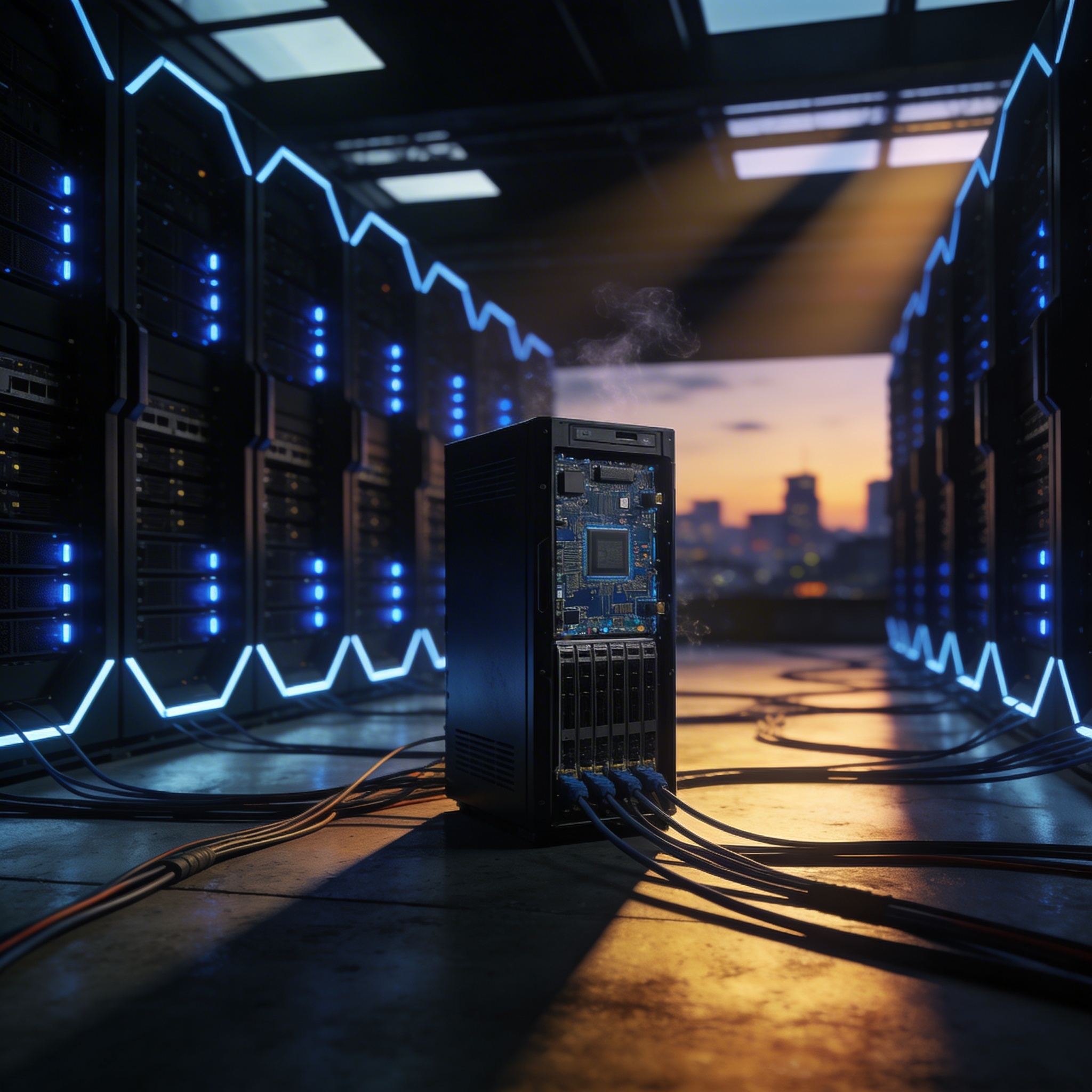
Imagine a self-driving car hurtling down a rain-slicked highway at 70 miles per hour. In a split second, its sensors detect a child stepping off the curb. Now imagine that car pausing — even for 200 milliseconds — while it waits for a distant data center in Virginia to process that information and send a response back. That pause, imperceptible to a human in conversation, is an eternity at highway speed. It is also the single most compelling argument for why edge computing is no longer a niche experiment. It is an existential challenge to the cloud as we know it.
Imagine a self-driving car hurtling down a rain-slicked highway at 70 miles per hour. In a split second, its sensors detect a child stepping off the curb. Now imagine that car pausing — even for 200 milliseconds — while it waits for a distant data center in Virginia to process that information and send a response back. That pause, imperceptible to a human in conversation, is an eternity at highway speed. It is also the single most compelling argument for why edge computing is no longer a niche experiment. It is an existential challenge to the cloud as we know it.
From the Center to the Periphery — A Seismic Shift in Architecture
For the better part of two decades, the cloud was the unquestioned cathedral of modern computing. Businesses migrated their workloads upward, trusting that centralized data centers — operated by Amazon, Microsoft, Google, and their peers — would handle everything from payroll processing to machine learning pipelines. The model was elegant in its simplicity. Send data up, get answers back. Repeat indefinitely.
But something fundamental has changed. The sheer volume of data being generated at the edges of our networks — by sensors, cameras, medical devices, industrial machines, and smartphones — has grown beyond what centralized infrastructure was ever designed to absorb efficiently. According to research published on ResearchGate, edge computing has emerged as a direct response to this crisis, processing data at or near the source rather than routing it thousands of miles to a central server [7]. The latency savings are not marginal. They are transformational.
Edge computing brings computation directly to or near the data source — whether that's a sensor on a factory floor, an IoT device in a hospital room, or a cell tower serving a dense urban neighborhood [10]. By doing so, it eliminates the round-trip delay inherent to cloud architecture. For applications where milliseconds matter — autonomous vehicles, real-time fraud detection, remote surgery — that elimination is not a convenience. It is a necessity.
The numbers underscore the momentum. Research Nester, as cited by Cyber Defense Magazine, projects that the edge computing industry will grow to $26.6 billion by 2025, a figure that reflects genuine enterprise adoption rather than speculative investment [3]. Omdia's market landscape report for 2026 further reinforces this trajectory, identifying distributed computing infrastructure as one of the defining shifts in enterprise technology strategy [4]. The center is no longer holding. The periphery is where the action is.
---
""The latency savings from edge computing are not marginal — they are transformational, and for autonomous systems, they are the difference between life and death.""
The IoT Explosion — Too Much Data, Too Little Bandwidth
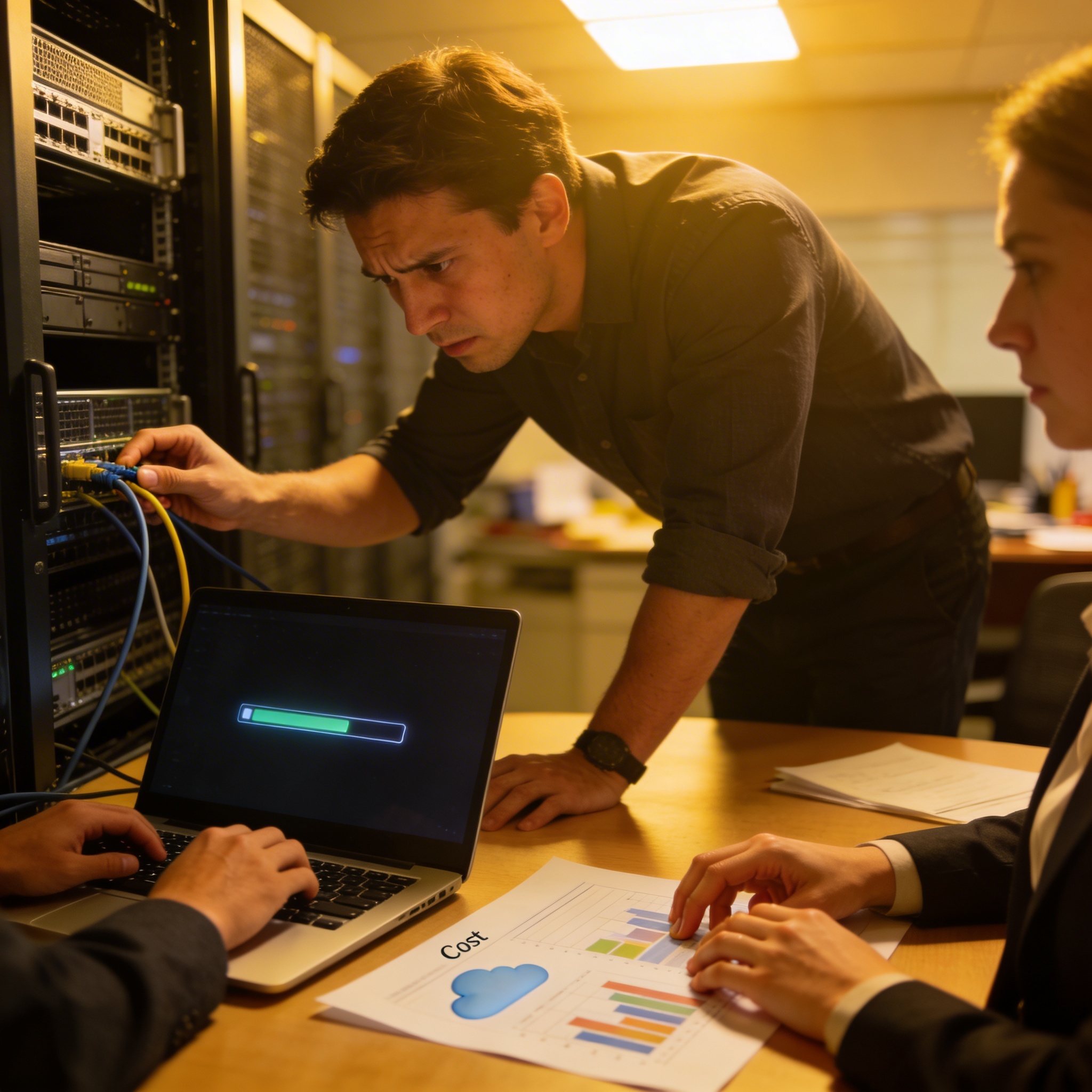
If there is a single catalyst behind the edge computing revolution, it is the Internet of Things. The proliferation of connected devices has reached a tipping point that legacy cloud architectures simply were not designed to handle [1]. Every smart thermostat, every industrial pressure gauge, every wearable health monitor is generating a continuous stream of data — and the bandwidth required to shuttle all of it to a centralized cloud server is staggering, both in cost and in physical network capacity.
Edge computing alleviates this strain by reducing the volume of data that needs to be transmitted to a central server in the first place [5]. Rather than sending raw sensor readings from ten thousand factory machines to a cloud platform, an edge device can process that data locally, extract the relevant insights, and transmit only a compact summary upstream. The result is a dramatic reduction in bandwidth consumption, lower operational costs, and faster decision-making at the machine level.
The telecommunications industry has been among the first to recognize this reality. According to Forbes Tech Council, edge computing in telecom enables real-time network optimization directly at cell towers, with AI models deployed at the edge capable of detecting congestion instantly and rerouting traffic without waiting for a centralized command [Forbes/recent news]. In manufacturing, the implications are equally profound. A production line that can detect equipment anomalies in real time — without waiting for cloud confirmation — can prevent costly downtime before it begins.
Healthcare represents perhaps the most urgent frontier. Yahoo Finance reports that the healthcare edge computing market is expanding rapidly, driven by the need for real-time patient monitoring and the strict data sovereignty requirements that govern medical information [28]. A patient's vital signs cannot afford a cloud round-trip. Neither can the diagnostic algorithms interpreting them. The IoT explosion has not merely created an opportunity for edge computing. It has made it inevitable.
Packet Power's analysis of the U.S. edge computing landscape notes that this evolution marks a pivotal shift in how data is processed and utilized across industries — not just in technology-forward sectors, but in agriculture, logistics, energy, and public safety as well [6]. The cloud was built for a world with fewer endpoints. That world no longer exists.
---
""The cloud's convenience has always come with strings attached. Enterprises are finally reading the fine print.""
The Cloud's Achilles' Heel — Latency, Cost, and Sovereignty
The cloud is not going away. Let's be clear about that. But its limitations, long papered over by marketing narratives and enterprise inertia, are becoming impossible to ignore. Chief among them is latency — the time it takes for data to travel from a device to a data center and back. For consumer applications like streaming video or email, this delay is negligible. For industrial automation, financial trading platforms, and autonomous systems, it is a structural flaw.
Softjourn's comprehensive cloud computing statistics report notes that Gartner predicts 95% of new digital workloads will be developed on cloud-native platforms by 2026 [8]. That statistic is frequently cited as proof of the cloud's enduring dominance. But it obscures a more nuanced reality: cloud-native does not mean cloud-only. Increasingly, cloud-native architectures are being designed with edge nodes as first-class components, not afterthoughts. The architecture is evolving, and the center of gravity is shifting outward.
Cost is the second fault line. Cloud computing bills have become a source of genuine anxiety for enterprise CFOs. The pay-as-you-go model that once seemed liberatingly flexible has, for data-intensive workloads, become punishingly expensive. Dogtown Media's analysis of mobile edge computing in 2026 highlights how businesses are actively shifting to on-device processing to slash cloud costs, reduce latency, and strengthen data privacy simultaneously [recent news]. This is not a fringe movement. It is a mainstream cost optimization strategy.
Then there is the question of data sovereignty. Regulations like GDPR in Europe and emerging data localization laws across Asia and Latin America are forcing enterprises to reconsider where their data actually lives. Sending sensitive customer information to a data center in another country — or another continent — may no longer be legally permissible, let alone strategically wise. Edge computing offers a compelling answer: keep the data close to where it is generated, process it locally, and comply with jurisdictional requirements without architectural gymnastics. The cloud's convenience has always come with strings attached. Enterprises are finally reading the fine print.
---

""The edge is not waiting for permission. It is already here, already processing, already deciding.""
Edge AI and the Architecture of Tomorrow
The most electrifying development in the edge computing story is the marriage of artificial intelligence with edge infrastructure. For years, AI was the cloud's most powerful argument for centralization. Training large language models and deep neural networks required the kind of computational horsepower that only hyperscale data centers could provide. That assumption is cracking.
As Medium's 2026 edge computing analysis explains, the biggest change in edge computing this year is the rise of Edge AI — the deployment of AI models directly on edge devices, without requiring a connection to a central server [recent news]. Advances in chip miniaturization and model compression have made it possible to run sophisticated inference workloads on hardware that fits inside a router, a camera, or an industrial gateway. The implications are profound. AI-powered quality control on a factory floor. Real-time language translation on a handheld device. Predictive maintenance on a wind turbine, miles from the nearest data connection.
Omdia's distributed computing infrastructure report for 2026 frames this convergence of edge and AI as one of the defining market opportunities for technology leaders over the next decade [4]. McKinsey's Technology Trends Outlook similarly identifies distributed infrastructure as a strategic priority for enterprises navigating the next wave of digital transformation [19]. The message from analysts is consistent: the organizations that build edge-capable architectures today will hold decisive competitive advantages tomorrow.
This does not mean the cloud becomes obsolete. The more accurate picture is one of intelligent orchestration — a hybrid model where edge devices handle time-sensitive, local processing, while the cloud manages long-term storage, model training, and global analytics. Gcore's edge-cloud trends analysis describes this as a natural evolution toward a continuum of computing, rather than a binary choice between edge and cloud [24]. The architecture of tomorrow is not a replacement. It is a reimagination.
The edge is not waiting for permission. It is already here, already processing, already deciding. And the enterprises that recognize this shift — not as a threat to be managed, but as a foundation to be built upon — will be the ones that define the next era of technology.
---